Communities
Hokulia vs Kūkiʻo: Land Above Kealakekua or the Beach Club at the Shore?

Every serious buyer on the Kona Coast eventually ends up holding the same two brochures. One is for Kūkiʻo, the quiet beach-club community north of the airport where the lawns run to the sand. The other is for Hōkūliʻa, the 1,260-acre hillside community above Kealakekua Bay in South Kona, where the lots are measured in acres and the ocean is something you look down on. They are twenty-five minutes apart and they could not be more different places to build a house. This is the comparison we give clients who ask us which one.
Hokulia at a glance
Hōkūliʻa is a private, gated community spread across roughly 1,260 acres and about three miles of elevated, west-facing shoreline south of Kailua-Kona, near the town of Kealakekua. Lots are large, typically one to two acres and often more, laid out along a Jack Nicklaus Signature golf course that Golf Digest has ranked among the top five in Hawaiʻi. It is the only private oceanside course on the island. Club life centers on an indoor-outdoor clubhouse, the Pavilion restaurant, a lap pool and spa, tennis and pickleball, and an ocean program that runs off the community’s own shoreline.
What makes Hōkūliʻa unusual is the land itself. The community sits on the lower slopes of Mauna Loa in the heart of the Kona coffee belt, with cooler air, richer soil and long views down the coast. It also holds the Hōkūliʻa Shoreline Historic Park, 140 oceanfront acres of trails, archaeological sites and a cultural interpretive center that the community maintains rather than builds on.
Kūkiʻo at a glance
Kūkiʻo is the opposite proposition: a shoreline community on the flank of Hualālai with no hotel, a members-only club, an oceanfront beach club, and eighteen holes plus a ten-hole short course. Lots run from the sand back into the kiawe and lava, and the architecture is held to a low, consistent language, so the ocean stays the loudest thing on the property. It is dry, warm and at sea level, and it is the more built-out of the two, which shapes what kind of project you will actually be doing there.
Hokulia vs Kukio: land and privacy
At Hōkūliʻa you are buying acreage. A one-to-two-acre lot on a slope means real setbacks from neighbors, room for a guest house, a pool terrace that sits away from the main house, and landscape that can be an orchard rather than a border. The trade is distance: the beach is a drive, not a walk, and the community is spread out by design.
At Kūkiʻo you are buying proximity. Lots are smaller and the beach club is minutes away on foot or by cart. Privacy comes from the design guidelines and the landscaping rather than from acreage. For owners who want to swim before breakfast, that is the whole point.
Views and climate: the hillside or the shoreline
The single biggest difference is elevation. Hōkūliʻa homes sit several hundred feet up, and the west-facing slope gives nearly every lot a wide sunset view over the water with the coastline curving away to the north. The air is a few degrees cooler than the shore, and the mauka-to-makai flow that moves up and down the mountain each day does a good share of the cooling for you. Morning sun, afternoon light on the water, and a good chance of evening cloud that keeps the house comfortable.
Kūkiʻo is sea level and sun. The views are closer and louder, the surf is audible from the lanai, and the design work goes into shade, deep overhangs and courtyards that shelter the pool from the trade winds. Both are beautiful. They are simply different days.
Golf and club life
Both communities are club communities, and both courses are among the best in the state. The Club at Hōkūliʻa is a Nicklaus Signature layout built to put the ocean in view from nearly every tee and green, and it has recently been through a renovation. Kūkiʻo’s two courses are quieter and more residential in feel, with the short course a genuine daily-use amenity for families. If golf is the reason you are buying, Hōkūliʻa has the bigger name; if golf is one of many things you will do, Kūkiʻo’s beach club may matter more.
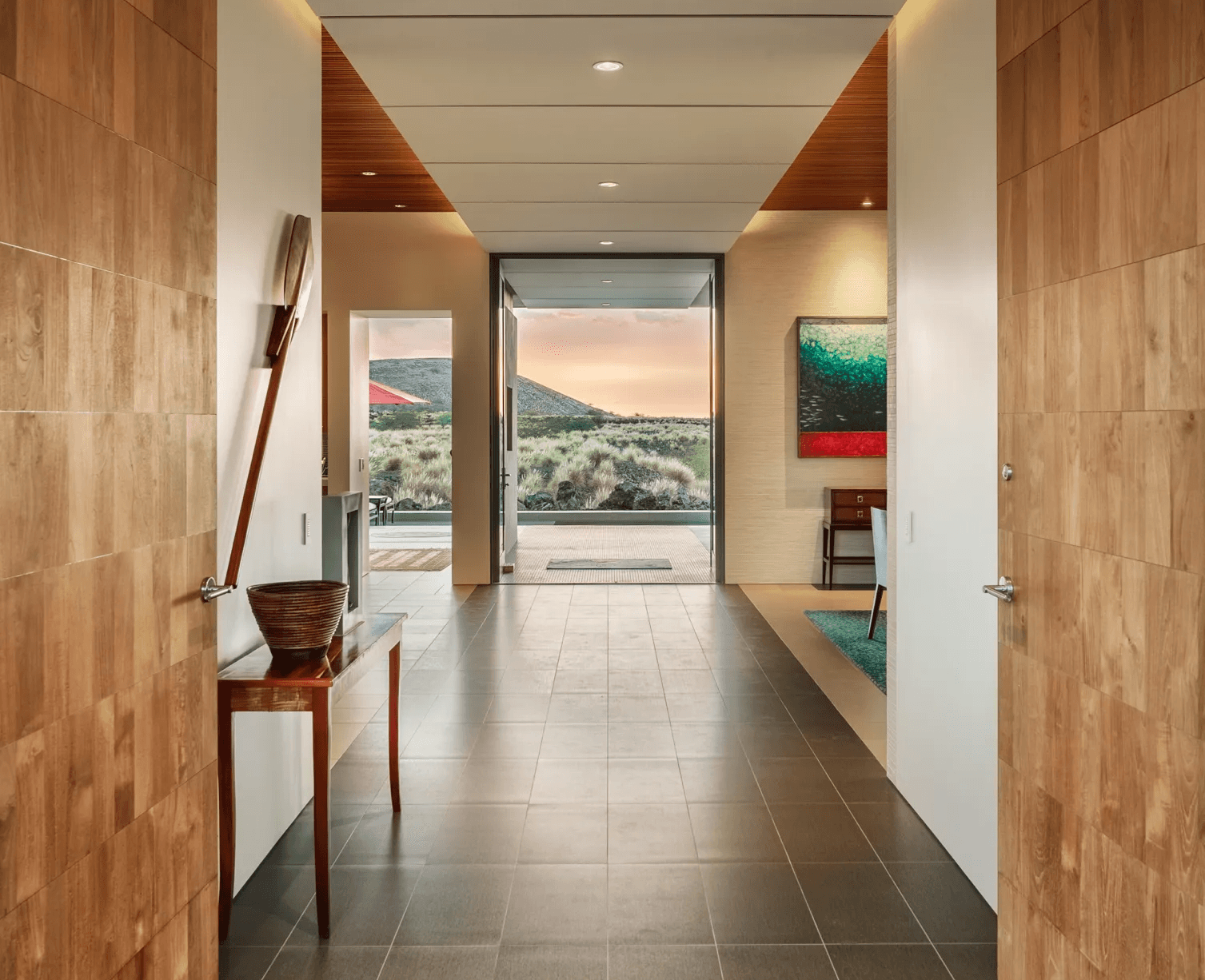
Building a home at Hokulia
Design guidelines
Hōkūliʻa’s guidelines are written to keep homes in harmony with the slope: architectural styles, roof forms, landscape palettes and colors that sit into the hillside rather than on top of it. Expect a proper design review before the county ever sees your drawings, and treat it as a resource. The reviewers know which rooflines block a neighbor’s view and which orientations catch the afternoon sun; that knowledge is worth having early.
Slope, driveways and drainage
Building on a hillside is a different discipline from building on flat lava. Grading, retaining, driveway gradient and stormwater all become design decisions rather than afterthoughts, and the site work line in a Hōkūliʻa budget deserves an honest number before you fall in love with a floor plan. Done well, the slope is what gives you the view and the privacy in the first place.
Water, power and the agricultural roots
Hōkūliʻa grew out of agricultural land, and that heritage is still in the DNA of the community: the club runs on its own catchment wells and a photovoltaic system, and many owners treat their landscape as a working part of the property, with coffee, citrus and native plantings. Plan the landscape with the house, not after it. It is also the kind of setting where a well-designed home can run largely on solar and stored water, as we did at a South Kona residence a few minutes down the coast.
Lava zone and insurance
Because Hōkūliʻa sits on Mauna Loa’s lower slope rather than Hualālai’s, its lava hazard zone differs from Kailua-Kona proper; parcels in this part of South Kona generally fall in zone 3, which is still insurable through standard private carriers. Confirm the zone for your specific lot before you buy, because zones 2 and 3 sit closer together on this side of the coast than they do further north.
Access and timeline
Hōkūliʻa is reached from the Māmalahoa Highway and the partially completed bypass road that runs south from Keauhou. Plan on the normal Big Island custom-home timeline of eighteen to thirty-six months from contract to keys, driven mostly by design review and Hawaiʻi County permitting, and add a little for a hillside site.
Building a home at Kūkiʻo
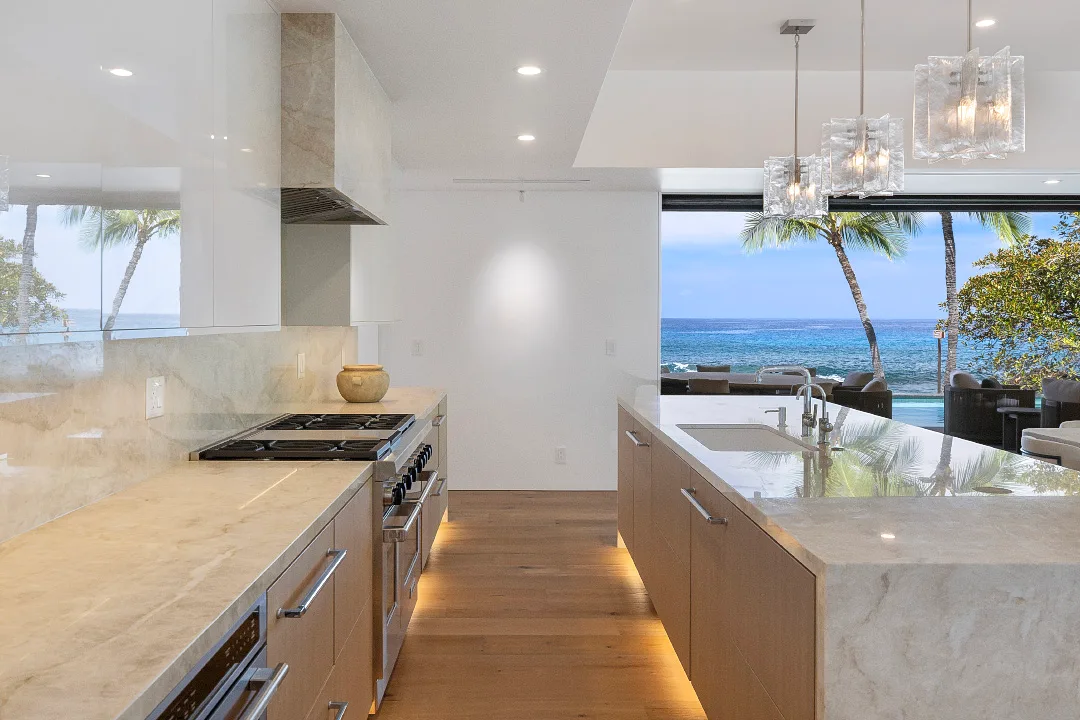
Kūkiʻo’s review favors single-level silhouettes, deep overhangs and materials that read as landscape: stone, dark metal roofing, timber that greys. It sits in lava zone 4, the same easy-to-insure zone as most of the Kona Coast. Because lots are close to the water, anything near the shoreline touches the Special Management Area, which adds a Planning Department review and setback rules to the permit. Salt is the other constant: marine-grade hardware and finishes that can be maintained rather than replaced are not optional here.
Hokulia’s history, and why it matters to buyers
It is worth knowing that Hōkūliʻa had a hard first decade. The county permitted the project in 1998, a judge halted it in 2003 over the agricultural zoning, a settlement was reached in 2012, and new ownership came in through a bankruptcy in 2013 and 2014, paying the county some twenty million dollars to settle obligations on the bypass road. That history is why the community is still releasing lots today in named phases like Nalu Kai on the oceanside and Mahea Lani on the hillside, and why it feels less finished than Kūkiʻo. For a buyer that is mostly good news: it means real custom lots at prices that the shoreline communities left behind years ago, in a community whose legal questions are settled.
Which should you choose?
Choose Hōkūliʻa if you want land, elevation, a cooler climate, a wide view and the sense of living on a mountain that happens to face the sea. Choose Kūkiʻo if you want the water at the door, a beach club as your daily life, and a finished community with a deep bench of neighbors. Both hold value. Both have exacting design review. The house you build should be designed for one of them from the first sketch, because a Kūkiʻo house on a Hōkūliʻa slope, or the reverse, never quite works.
Frequently asked questions about Hokulia
Where is Hokulia?
Hōkūliʻa is in South Kona on Hawaiʻi Island, above Kealakekua Bay near the town of Kealakekua, roughly twenty to thirty minutes south of Kailua-Kona.
How big are the lots at Hokulia?
Most lots are one to two acres, with some larger. Recent listings have ranged from under half a million dollars for interior parcels to over a million for premium oceanside and fairway lots, with finished homes typically in the four-to-eight-million range.
Is Hokulia a gated community?
Yes. Hōkūliʻa is private and gated, with a members’ club, and it maintains the public Hōkūliʻa Shoreline Historic Park along its coast.
Can I build a custom home at Hokulia?
Yes. Lots are sold for custom construction subject to the community’s design guidelines, and the current phases include both hillside and oceanside parcels.
What lava zone is Hokulia in?
The South Kona slope around Hōkūliʻa generally falls in lava zone 3, which is insurable with standard carriers. Always confirm the zone for the specific parcel.
Hokulia or Kukio for golf?
Hōkūliʻa’s Nicklaus Signature course is the higher-ranked and the only private oceanside course on the island. Kūkiʻo offers eighteen holes plus a ten-hole short course in a quieter residential setting.
Thinking about building at Hokulia?
We build in South Kona. Tell us which lot you are looking at and we will tell you, honestly, what it will take to build on that slope before you spend a dollar on drawings.