Building in Hawaiʻi
Building a Luxury Home on the West Side of Hawaii Island: What to Know Before You Buy the Lot

What we have learned designing and building more than 100 homes on Hawaii Island, written for buyers planning a $4 million and up custom home on the Kona and Kohala coasts.
Key Takeaways
A finished luxury home on the Kona-Kohala coast typically runs $800 to $1,400 per square foot, before land, and often higher for oceanfront or resort estate lots. Mainland cost assumptions do not transfer.
Plan on 24 to 36 months from lot purchase to move-in. Design, community design review, county permitting, and construction each run on their own clock, and they mostly cannot overlap.
The lot decides half your budget. Lava rock site work, shoreline rules, community covenants, and utility availability can swing costs by seven figures before a single wall goes up.
Hawaii County permit times improved sharply in 2025, from more than six months to roughly two months for new residential construction, but corrections cycles and state agency reviews still add time.
Everything is shipped 2,400 miles. Freight adds 20 to 30 percent to material costs and 3 to 6 months of lead time to your schedule. Ordering early is not optional.
The west side is the right place to build for sun, sand, and long-term value, but it has its own set of rules: lava zones, the Special Management Area, dark-sky lighting, and private design review committees.
Hire your builder before you close on land, or at least before you finish the design. The most expensive mistakes we see happen in the first 90 days.
Why This Article Exists
Most of the people who call us have built before. They have owned homes in Aspen, Palm Beach, Napa, or Lake Tahoe. They are not new to construction. What they are new to is building on a volcanic island in the middle of the Pacific, where the ground is rock, the materials arrive by barge, and the rules were written to protect a coastline that belongs to everyone.
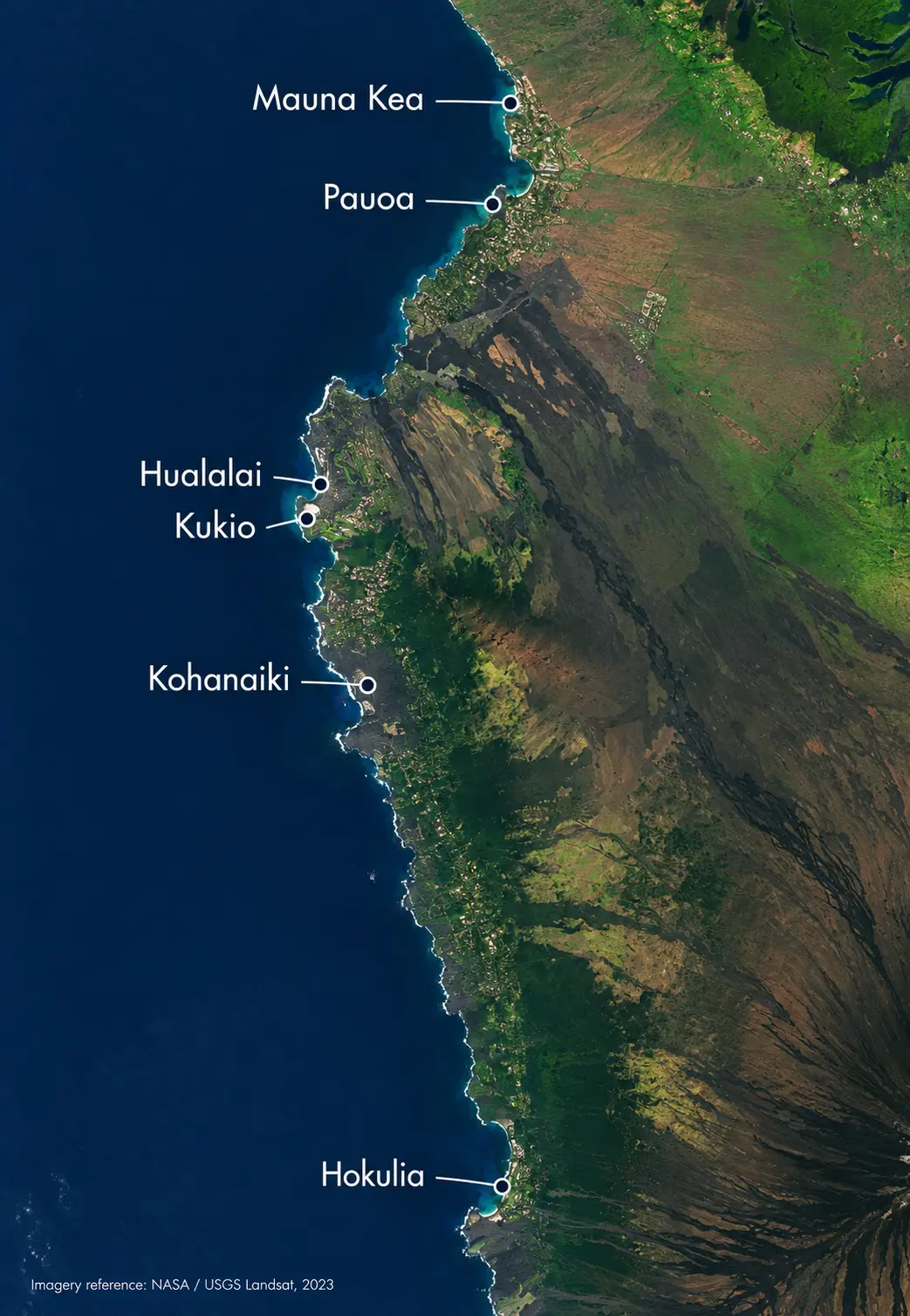
Nicholson Hawaii has designed or built more than 100 homes across the islands, most of them on the west side of Hawaii Island in and around Kailua-Kona, Hualalai, Kukio, Kohanaiki, Hokulia, Mauna Kea, and Mauna Lani. This article is our attempt to write down what we tell every prospective client in the first meeting, plus the things we wish more people knew before they bought their lot.
If you are planning a $4 million or larger build here, this is the need-to-know list.
Part 1: The Questions Every Buyer Asks (and Why They Matter Here)
These are the questions we hear most, in roughly the order people ask them. The short answers are here. The long answers are in the rest of the article.
"What will it actually cost?"
Why this is the first question: Because the numbers you find online are all over the map. Statewide averages quote $300 to $600 per square foot. Resort builders quote $1,000 and up. Both are technically true and both are useless without context.
Short answer: For the kind of home a $4M+ buyer is building on the west side, budget $800 to $1,400 per finished square foot for the house, then add site work, pool, landscaping, soft costs, and tax. A 5,000 square foot home with a pool on a lava lot lands well above $5 million all-in before land.
"How long will it take?"
Why it matters: Most clients are timing a build around a life event: a retirement, a child's schedule, a sale of another property. A 6 month miss is a real problem.
Short answer: 24 to 36 months from lot purchase to occupancy is realistic. Some go faster, most do not. The three biggest variables are design review, permitting, and material lead times, and only one of those is fully in your builder's control.
"Can I build what I want on the lot I am looking at?"
Why it matters: This is the question that should come first but usually comes third. Lot listings on the west side rarely mention the lava zone, whether the lot sits in the Special Management Area, what the community design guidelines prohibit, or whether county water is available. All four can kill a design or add a year.
Short answer: Probably, but the lot will shape the design more than you expect. Get a builder or architect to look at the lot before you go into contract, not after.
"Should I buy land first or hire the team first?"
Why it matters: Because the lot and the design are one decision, not two.
Short answer: Engage the team before you close. A one-hour site walk and a review of the community guidelines costs almost nothing and has saved clients from lots that would never have supported the home they wanted.
"What about lava, hurricanes, and insurance?"
Why it matters: Mainland buyers hear "lava zone" and picture the near possibility of losing their home. The reality on the west side is different, but it still affects insurance and lending.
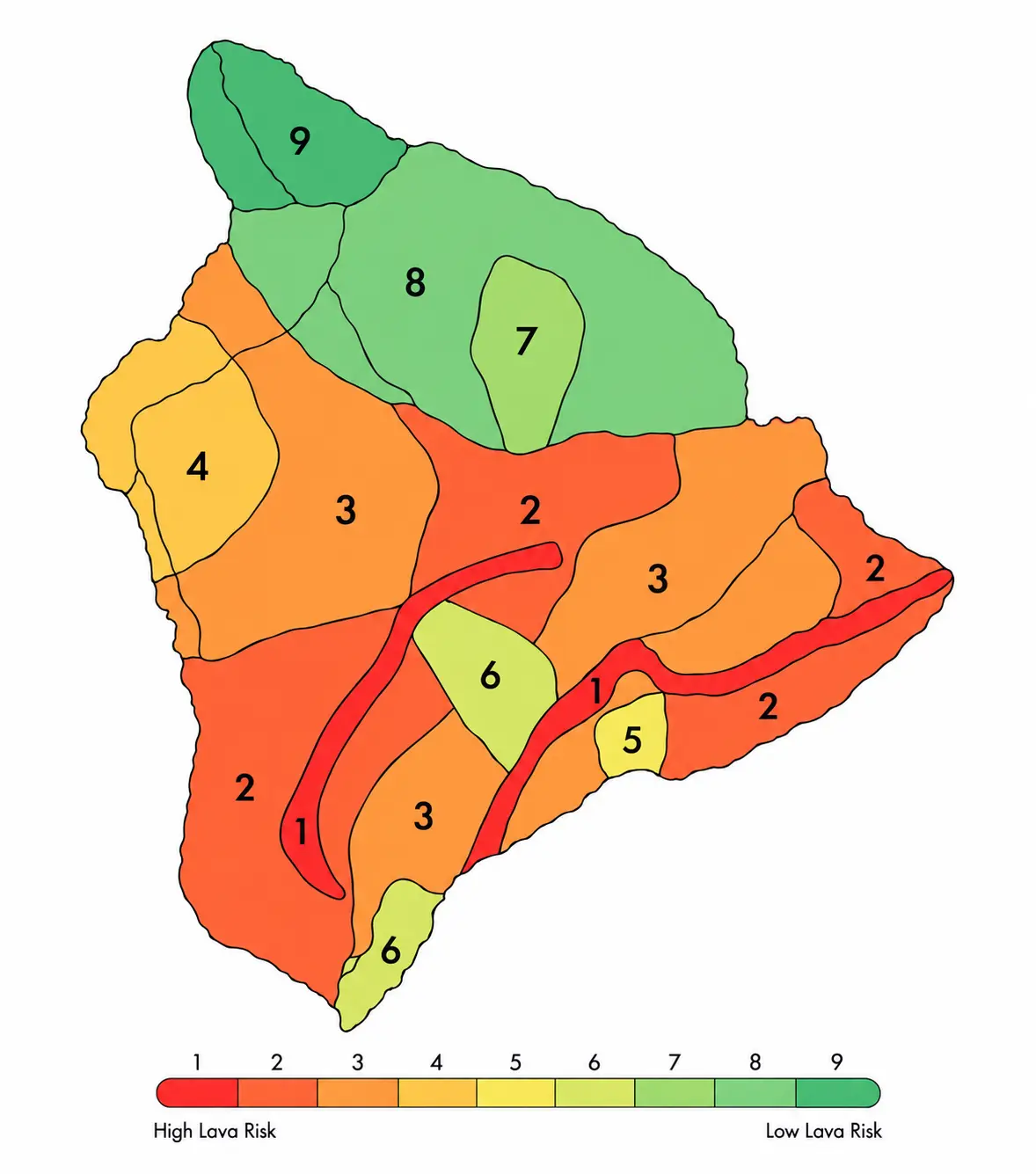
Short answer: Kailua-Kona and the Hualalai slopes are in Lava Zone 4. North Kona and the South Kohala coast fall in Zone 6. The Kohala resorts and Waimea are in Zones 8 and 9. All of these insure at standard rates with standard carriers. Hurricane coverage is a separate policy or rider, and you will want it.
"Can I manage this from the mainland?"
Why it matters: Most of our clients live somewhere else during construction. A six-hour time difference to the East Coast and a five-hour flight change how decisions get made.
Short answer: Yes, if your builder runs a real reporting cadence and you commit to a decision schedule. Remote ownership works well when it is designed into the process and poorly when it's improvised.
"Why the west side?"
Why it matters: Because the east side is cheaper and people ask.
Short answer: Sun, beaches, dry weather, the airport, and the resort communities. The west side is where the views, the sand, and the resale value are. It is also where the rules are most specific, which is why this article focuses there.
Part 2: What a Luxury Build on the West Side Really Costs
The per square foot ranges, and what they include
Published cost guides for Hawaii quote wide ranges because they mix a 1,500 square foot package home in Hilo with a 7,000 square foot estate at Hualalai. For the west side luxury market, here is how the tiers actually break down:
Tier | Typical finished cost per sq ft | What it looks like |
|---|---|---|
High-end custom, non-resort lot (Kona, Kohala Ranch, upper Hokulia) | $600 to $900 | Custom design, premium finishes, pool, county water and standard septic |
Resort community estate (Hualalai, Kukio, Kohanaiki, Mauna Kea, Mauna Lani) | $800 to $1,400 | Design review compliance, stone and wood exteriors, extensive lanais, pool pavilion, ohana |
Oceanfront or SMA lot with shoreline setback | $1,200 and up | Everything above plus coastal engineering, corrosion-grade everything, shoreline certification |
These figures cover the home itself. They do not include:
Land. Resort estate lots on the west side commonly run from the low millions to well over $10 million.
Site work. On a lava lot this is a separate line item and it is not small (more on this below).
Soft costs. Architecture, structural and civil engineering, landscape design, interior design, surveys, geotechnical, permits, and community design review fees. Budget 12 to 20 percent of construction cost.
General Excise Tax. Hawaii does not have a sales tax. It has a GET that applies to the full contract value, and the pass-through rate on Hawaii Island is 4.712 percent. On a $6 million build that is roughly $283,000 that shows up on every invoice.
Contingency. We recommend 10 percent held by the owner, separate from anything in the contract.
Furniture, fixtures, and equipment. FF&E on a home at this level often runs 10 to 15 percent of construction cost on its own.
What drives the number up or down
Site conditions. A flat, previously graded resort pad costs a fraction of a raw a'a lava lot with 30 feet of fall across it. Excavating trenches through blue rock, importing fill, and building retaining walls can run into the high six figures before foundations start.
Exterior materials. The west side look is stone, wood, copper, and glass. Every one of those is a long-lead, high-cost item that has to survive salt and sun. A home clad in lava rock veneer with ipe soffits and a copper standing-seam roof costs meaningfully more than stucco and asphalt shingle, and design review committees in most resort communities will not approve the cheaper option anyway.
Glass and indoor-outdoor design. Pocketing glass walls, motorized screens, and 12 foot ceilings are the whole point of living here. They also require engineered headers, custom glazing rated for wind, and long lead times from a handful of manufacturers.
Pools and water features. Almost every home at this level has one. An infinity-edge pool on a lava lot with a pool pavilion and outdoor kitchen is routinely a $500,000 to $1 million+ line item.
Mechanical systems. Full-house air conditioning, dehumidification, whole-house generators, PV with battery storage, and water filtration are standard expectations here, not upgrades.
Part 3: The Real Timeline
Here is how a west-side luxury build actually sequences. The ranges are from our own projects.
Phase | Typical duration | What controls it |
|---|---|---|
Lot due diligence and team selection | 1 to 3 months | You |
Schematic and design development | 4 to 8 months | Owner decisions, architect capacity |
Community design review (where applicable) | 2 to 6 months | Committee meeting schedule, resubmittals |
Construction documents and engineering | 3 to 5 months | Can overlap partly with design review |
County building permit | 2 to 4 months | Hawaii County DPW, plus Planning, DOH, DWS, Fire |
Construction | 14 to 22 months | Site conditions, material lead times, trade capacity |
Closeout, punch, FF&E install | 1 to 2 months | Furniture lead times, inspections |
Total: roughly 24 to 36 months.
On permitting specifically
Permitting on Hawaii Island has a reputation, and it was earned. As recently as early 2025, new residential construction permits were averaging more than six months to approve. A county task force cut that to about two months by mid-2025, and the county has committed to 30-day review cycles for most permit types. That is a real improvement.
Two things to know so you do not plan around the headline number:
The clock restarts with each corrections cycle. A permit that comes back with comments goes back into the queue. Clean, complete drawings from a team that knows the county reviewers are worth months.
The building permit is not the only permit. Wastewater plans route through the State Department of Health, which has had a backlog of its own. Water meters and fixture counts go through the Department of Water Supply. Lots in the Special Management Area go through Planning first, and an SMA permit has to be in hand before anyone else will issue anything.
Part 4: The 14 Problems People Run Into Building on the West Side
This is the section to bookmark. Every one of these has cost someone real money or real time. We have listed what the problem is, why it happens here specifically, and what to do about it.
1. The ground is rock, and it is not cheap rock
The problem: West Hawaii lots are lava. Pahoehoe is the smooth ropey kind and is relatively workable. A'a is the sharp, clinkery kind and it is brutal. Under both there is often dense "blue rock" that requires hydraulic breakers or, on some lots, blasting, which many communities restrict or prohibit.
Why it hits here: Every utility trench, every footing, every pool shell, every planter has to be cut out of this. There is essentially no native soil, so all landscaping soil is imported. Lava voids and tubes can show up under a footing and require redesign.
What to do: Get a geotechnical study and a topographic survey before you finalize the design. Design with the grade, not against it. Terrace the home rather than flattening the lot. Budget site work as its own line item with its own contingency.
2. Lava zones affect your insurance and lending, not your safety
The problem: Buyers hear "lava zone" and picture Leilani Estates. Lenders and insurers hear it and check a map.
Why it matters on the west side: The USGS lava flow hazard zones run from 1 (highest) to 9 (lowest). Kailua-Kona sits in Zone 4 on the flank of Hualalai, which last erupted in 1801. North Kona and the South Kohala coast, including the Mauna Lani and Mauna Kea areas, fall into Zone 6. Waimea and the Kohala mountain slopes are 8 and 9. All of these get standard insurance from standard carriers at normal rates, and lending follows normal underwriting. Zones 1 and 2, where coverage is limited to the state-run Hawaii Property Insurance Association with a $450,000 cap, are on the other side of the island in Puna and Ka'u.
What to do: Confirm the zone for your exact parcel (it is on the county GIS). Get insurance quotes during due diligence, not after closing. Plan for a separate hurricane policy or rider, and separate flood coverage if the lot is in a mapped flood or tsunami zone. Standard policies in Hawaii do not cover lava damage in any zone, so do not pay extra for a rider that does not exist.
3. Oceanfront means the Special Management Area, and the SMA sets the schedule
The problem: The best lots are close to the water. The closer you are, the more layers of review you enter.
Why it happens here: Hawaii's Coastal Zone Management law creates a Special Management Area that runs from the shoreline inland, often to the nearest highway. Any "development" inside it needs an SMA permit from the county before any other permit can be issued. Every lot that touches the shoreline also has a minimum 40 foot shoreline setback, which requires a certified shoreline survey prepared by a licensed surveyor and confirmed by the state. Building inside the setback requires a variance and a public hearing. Larger projects trigger an SMA Major permit, which goes to the Planning Commission with a public hearing and notice to neighbors.
What to do: Before going into contract on any coastal lot, have your team determine whether it is in the SMA and where the certified shoreline likely falls. Add 6 to 12 months to the schedule for an SMA Major. Design the home mauka of the setback from day one rather than betting on a variance.
4. Private design review committees are the real gatekeepers
The problem: In Hualalai, Kukio, Kohanaiki, Hokulia, Mauna Kea, and Mauna Lani, your design has to pass the community's architectural review committee before the county ever sees it. The guidelines are specific and enforced.
Why it matters: These committees control massing, height, roof forms, exterior colors and materials, glazing, exterior lighting (most require full dark-sky compliance), landscaping palettes, pool placement, and construction hours and staging. They meet on a schedule, not on demand. A design that ignores the guidelines gets sent back, and a full resubmittal can cost a quarter. Several communities also require deposits, review fees, and a builder registration process.
What to do: Read the design guidelines before you buy, not after. Hire an architect and builder who have been through that specific committee. Present a compliant design the first time. We have worked with the Hokulia design committee on multiple homes and can tell you what they push back on before you draw it. Our team has gotten our builds approved in every resort committee in West Hawaii. We've seen what fails, what passes, and what to expect before we start.
5. County permitting is better, but it is still a process
Covered in Part 3. The summary: budget 2 to 4 months for the building permit, assume at least one corrections cycle, and remember that DOH wastewater review, DWS water review, and Planning are separate tracks with their own clocks.
6. Water is not a given, and cesspools are illegal
The problem: Mainland buyers assume municipal water and sewer. Neither is guaranteed here.
Why it happens on the west side: Kona's county water comes from a small number of deep wells, and North Kona has gone through periods of well outages and mandatory conservation. Whether a water meter is available for a given lot, and what size, goes through the Department of Water Supply. Most resort communities run private water systems with their own allocation rules. Sewer is limited to a few areas and the resorts. New cesspools have been banned since 2016, and the state has mandated all existing cesspools be converted by 2050, so a new home needs an engineered septic or aerobic treatment system approved by the Department of Health.
What to do: Confirm water availability and meter size in writing during due diligence. Confirm whether the lot is on sewer or needs an individual wastewater system. On rock lots, a leach field may not be feasible and an aerobic treatment unit may be required. Get the DOH wastewater application in early because it is a separate review.
7. Power, and the systems that back it up
The problem: Hawaii Electric Light serves the island, and grid reliability is good but not perfect. There is no natural gas.
Why it matters: Homes at this level expect full HVAC, a wine room, a pool heater, an EV charger or three, and no interruptions. Cooking and outdoor kitchens run on propane. Solar is exceptionally productive on the west side, which is why nearly every new home we build includes PV with battery storage and an automatic-transfer generator.
What to do: Design the electrical service, PV array, battery, and generator as a system from the start rather than adding solar later. Plan propane tank placement early because it affects site work and setbacks. Budget for a service upgrade if the lot's existing HELCO service is undersized.
8. Every material is on a barge
The problem: Hawaii is 2,400 nautical miles from Los Angeles. Nearly all construction material is imported, and shipping across the Pacific has been running $4,500 to $6,000 per container.
Why it matters: Freight adds 20 to 30 percent to material cost compared to a mainland metro, and more for heavy or oversized items like stone, steel, and large glass. Lead times run 3 to 6 months for windows, doors, custom millwork, stone, and specialty fixtures. A damaged pallet of tile on the mainland is a two-day delay. Here it is a six-week delay. Tariff changes in 2026 have added more volatility to steel, aluminum, and imported finish products.
What to do: Finalize selections early, ideally before permit issuance, so long-lead items can be ordered while the permit is in review. Expect your builder to warehouse materials on-island ahead of need. Build freight and escalation into the budget rather than treating them as surprises.
9. There are only so many trades on the island
The problem: The binding constraint on how many luxury homes get built on the west side each year is not lots or permits. It is people.
Why it happens here: Hawaii has a documented shortage of skilled craft workers, and you cannot pull a crew from a neighboring state the way you can in Colorado or Florida. The pool of stone masons, finish carpenters, tile setters, and glaziers capable of resort-level work on this island is small, and they are all busy. Some trades commute from Hilo, two hours each way.
What to do: This is the strongest argument for choosing a builder with an established trade network and steady work. Subcontractors prioritize the general contractors who keep them employed. A builder who has to assemble a crew from scratch will lose months. Sequence the schedule around the trades that are hardest to get, not around what looks efficient on paper.
10. Salt, sun, vog, and termites will attack the house from day one
The problem: The west side's environment is hard on buildings in ways that mainland detailing does not account for.
Why it matters:
Salt air corrodes standard fasteners within a few years. Properties within roughly 500 feet of the shoreline need Type 316 stainless steel hardware, and further inland at least 304 stainless or hot-dip galvanized.
UV exposure on the leeward coast is intense year-round and ages exterior paint, sealants, and wood finishes faster than almost anywhere else in the country.
Vog, the volcanic sulfur dioxide haze that drifts over Kona when Kilauea is active, is acidic. It accelerates corrosion on metal roofing, HVAC coils, and electronics, and it drives the need for good filtration and sealed mechanical spaces.
Formosan subterranean termites are among the most aggressive in the world. Hawaii code requires termite protection for all structural wood. That means treated framing, borate treatment, physical barriers at slabs, and careful detailing at every wood-to-concrete contact.
Wind. Hurricane strapping and high-wind glazing are code, and the code is enforced.
What to do: Insist on marine-grade specifications throughout, not just on the visible parts. Prefer steel, aluminum, copper, and treated or naturally durable woods. Design deep overhangs and shaded lanais for both comfort and durability. Set up a maintenance plan at handover. A luxury home here is a boat that does not move.
11. Cultural and archaeological sites are real, and they deserve respect
The problem: The Kona and Kohala coasts were densely settled for centuries before contact. Lava tubes, burial sites (iwi kupuna), heiau, trails, and agricultural features are common.
Why it matters: Many parcels require an archaeological inventory survey before development, reviewed by the State Historic Preservation Division. Finds can require preservation buffers, redesign, or monitoring during excavation. Inadvertent discovery of human remains during construction stops work by law until the proper process is followed. Resort communities generally have already mapped and set aside preservation areas, but individual lots can still have features.
What to do: Treat this as a design input, not an obstacle. Find out early what has been surveyed and what the preservation conditions on the lot are. Budget time for SHPD review. Choose a team that understands the protocol and treats these sites with the seriousness they deserve. In our experience, owners who embrace this end up with homes that feel more rooted in place.
12. Managing a build from 2,500 miles away
The problem: Most owners at this level are not on-island during construction. Decisions stall, small issues grow, and the owner learns about problems late.
What works: A fixed reporting cadence (we send weekly photo and schedule updates and hold a standing video walk), a shared decision log with due dates, an owner's representative or interior designer empowered to make defined decisions, and three or four planned site visits at key milestones: foundation, framing and rough-in, finishes, and pre-closeout.
13. Financing, draws, and taxes work differently
The problem: Construction lending in Hawaii is available but the lender pool is smaller, appraisals on custom resort homes are difficult, and draw inspections have to be scheduled with island logistics in mind.
What to know: Many buyers at this level build with cash and finance later, or use a portfolio line. Builder's risk insurance during construction is required and priced for hurricane exposure. General Excise Tax applies to the full contract at 4.712% on Hawaii Island, and it is not something a contractor can waive. Property tax reassessment at completion is significant, and Hawaii County has a lower rate for owner-occupied homes with a homeowner exemption than for second homes.
14. Licensing, owner-builder, and who is actually accountable
The problem: Hawaii requires contractors to be licensed under HRS Chapter 444, and the county checks. Owner-builder permits exist but they shift all liability to you, restrict sale of the home for a period, and make insurance and warranty claims harder.
What to do: Verify licenses through the state DCCA lookup. Require proof of insurance and bonding capacity. Understand who holds the contract with each subcontractor. On a project this size, a licensed general contractor carrying the full scope is the only structure we would recommend.
Part 5: Design-Build or Architect First? Our Honest Take
We are a design-build firm, so discount this accordingly. Here is the tradeoff as we see it.
Architect-led, then bid to builders gives you an independent designer and competitive pricing at the end. The cost is time (bidding adds 2 to 4 months), cost uncertainty until the very end of design, and the risk that a design gets priced 30 percent over budget and has to be redrawn. On the west side that redesign also means going back through community review.
Design-build puts the architect and builder on the same team from the first sketch. Pricing runs alongside design so you never fall in love with something you cannot afford. Long-lead items get ordered earlier. Constructability on a lava lot gets solved on paper. The tradeoff is that you are trusting one firm for both, so the firm's track record and transparency matter more.
Plenty of excellent homes on this coast have been built both ways. What we would not recommend is buying a lot, commissioning a design in isolation, and only then asking what it costs to build in Kona.
Part 6: Due Diligence Checklist Before You Close on a West Side Lot
Run through this before your contingency period ends.
Lava zone for the exact parcel, and insurance quotes in hand.
SMA status and, if coastal, an estimate of where the certified shoreline and 40 foot setback fall.
Community design guidelines read in full, including height limits, setbacks, roof and material requirements, lighting rules, and construction restrictions.
Water: county meter availability and size, or private system allocation.
Wastewater: sewer connection or DOH-approved individual system feasibility on rock.
Power: HELCO service size and location.
Topographic survey and geotechnical report, or at minimum a builder's site walk.
Archaeological survey status and any recorded preservation areas.
Flood and tsunami zone maps.
View corridors and neighbor build-out, including what an empty makai lot could become.
Access, staging, and construction logistics, especially on steep or narrow lots.
A preliminary cost and schedule from a builder based on the home you actually intend to build.
Frequently Asked Questions
How much does it cost to build a luxury home in Kona or on the Kohala Coast? For custom homes in the resort communities, plan on $800 to $1,400 per finished square foot for the house, plus site work, pool, soft costs, and 4.712 percent GET. Oceanfront and lots inside the Special Management Area run higher.
How long does it take to build a custom home on the Big Island? Roughly 24 to 36 months from lot purchase to move-in. Design and community review take 6 to 14 months, county permitting 2 to 4 months, and construction 14 to 22 months.
Is Kona in a dangerous lava zone? Kailua-Kona is in Lava Zone 4 and much of the resort coast is in Zone 6 or lower. Insurance and lending are standard. The high-risk Zones 1 and 2 are in Puna and Ka'u, on the other side of the island.
Do I need hurricane insurance? Yes. Hurricane coverage is typically a separate policy or rider in Hawaii. Flood insurance is also separate if the lot is in a mapped flood zone.
Can I build a cesspool? No. New cesspools have been banned since 2016. A new home needs a sewer connection or a DOH-approved septic or aerobic treatment system.
What is the Special Management Area? A coastal band regulated under state law where any development needs a county SMA permit before other permits can be issued. Lots touching the shoreline also have a minimum 40 foot setback.
Can I build my own home as an owner-builder in Hawaii? Legally yes, but it shifts liability, restricts resale, and complicates insurance. For a home at this level we do not recommend it.
What is the best time of year to start construction in Kona? The west side is dry most of the year, so weather is rarely the driver. Start when the permit is issued and long-lead materials have been ordered.
Which communities on the west side allow custom homes? Hualalai, Kukio, Kohanaiki, Hokulia, Mauna Kea, Mauna Lani, Kohala Ranch, and a number of non-gated areas in North and South Kona and Kohala. Each has its own design review process and guidelines.
Where We Fit In
Nicholson Hawaii is a design-build general contractor based in Kailua-Kona. We have designed or built more than 100 homes across Hawaii, most of them within an hour's drive of our office, in the communities described above. We have been through the Hokulia design committee, built on raw lava and on graded resort pads, and worked with owners on three continents.
If you are evaluating a lot on the west side or already own one and want a straight answer on what your home would cost and how long it would take, we are happy to walk the site with you. You can also look through our completed projects to see what the finished product looks like.
Sources and Further Reading
Hawaii County permit backlog reduction, Big Island Now, August 2025: https://bigislandnow.com/2025/08/15/hawai%CA%BBi-county-reduces-building-permit-backlog-approval-wait-times/
Hawaii County Office of the County Auditor, Building Division audit: https://www.hawaiicounty.gov/our-county/legislative/office-of-the-county-auditor/audit-reports/hawaii-county-department-of-public-works-building-division
Hawaii County Planning Department, Special Management Area and shoreline setback: https://www.planning.hawaiicounty.gov/resources/special-management-area-sma
Hawaii Office of Planning, SMA permit overview: https://files.hawaii.gov/dbedt/op/czm/program/sma/SMA-Permit-Short.pdf
Big Island lava zones guide, Hawaii Estates: https://hawaiiestates.com/blog/lava-zones-on-the-big-island-what-buyers-should-know
Lava zones and homeowners insurance, Hawaii Life: https://www.hawaiilife.com/blog/puna-lava-zones-neighborhoods-and-homeowners-insurance/
Big Island new construction cost and timeline overview, KE Team Hawaii: https://keteamhawaii.com/big-island-new-construction
EPA, cesspools in Hawaii and the 2050 deadline: https://www.epa.gov/uic/cesspools-hawaii
Hawaii cesspool law update, KE Team Hawaii: https://keteamhawaii.com/blog/hawaii-cesspool-law-update-2026-what-hb-1618-means-for-big-island-homeowners-and-buyers
ABC Hawaii, construction material costs under the 2026 tariff shift: https://www.abchawaii.org/construction-material-costs-in-hawai%ca%bbi-under-the-2026-tariff-shift/
ABC Hawaii, construction industry outlook 2026: https://www.abchawaii.org/construction-industry-outlook-2026/
ABC Hawaii, Hawaii construction workforce shortage: https://www.abchawaii.org/solving-the-hawaii-construction-workforce-shortage/
Construction materials in Hawaii, H-1 Construction: https://h1constructionhawaii.com/construction-materials-in-hawaii-new-home-considerations/
Building Science Corporation, "Blue Hawaii" (termites, corrosion, humidity): https://buildingscience.com/sites/default/files/document/bsi-042_blue_hawaii_c_0.pdf
Big Island microclimates and ownership costs, Wai Pacific: https://waipacific.com/blog/hilo-vs-kailuakona-microclimates-and-ownership-costs