Communities
The Best Resort Communities On Hawaii Island - Our Experience Building Luxury Homes For 25 Years

If you're looking to build in West Hawaii, mainly the Kona Coast, Waikoloa or Kohala, you've probably looked into the resort communities here. If you're moving from somewhere else in the states or the world, building a home in Hawaii can be daunting. Whether it's the quality of the build, permitting, or
We've spent over 25 years building
Ask anyone who has built on the Kona Coast and they will tell you the same thing: the community you choose decides the house you get. Not just the view or the beach club, but the design review you will sit through, the lava zone your insurer will look up, and the permit timeline that sets the day you actually move in. This is our honest ranking of the Big Island’s resort communities as places to build, not just to buy, after twenty-five years of pouring foundations along this coast.
How we ranked the best resort communities on the Big Island
We weighed six things: the quality of the land and views, the strength and speed of the community’s design review, how the location sits in the county’s lava zone map, the realism of the building timeline, what daily life is like once the dust settles, and how well a home there holds its value. Prices move; those six things do not.
1. Kūkiʻo
What it is like to live at Kūkiʻo
Kūkiʻo is the quietest of the great communities because it has no hotel. There is a members-only club, an oceanfront beach club, and an 18-hole course with a 10-hole short course, but no resort traffic and no day guests. Home lots start at the shoreline back into the trees and lava up the hill, and the community keeps its architecture low and consistent, so the ocean is the greatest view on the property, next to your home of course.
Building a custom home in Kūkiʻo
Expect a thorough design review. Kūkiʻo’s guidelines favor single-level silhouettes, deep roof overhangs and materials that are similar in texture and colors to the landscape: stone, darker metal roofing, muted wood colors. The upside to this is that everything you build is protected by the same rules your neighbors follow, which is why Kūkiʻo homes hold their value the way they do. Lots here sit in lava zone 4, the same zone as most of the Kona Coast, which typically keeps home insurance easy to acquire.
2. Hualālai
Living at Hualālai Resort
Anchored by the Four Seasons, Hualālai has the most complete set of amenities on the island: the resort, two golf courses, the spa, the sports club and what almost feels like a village feel along the shoreline. It is the community for owners who want to arrive and have everything running. With five main restaurants on resort grounds, home owners can experience luxurious dining year round. A few restaurants are also exclusive to home owners, as opposed to resort guests. The resort is equipped for year round living, but home building can sometimes be complex.
Building at Hualālai: the design review board
Hualālai’s Development Review Board is one of the most active on the island, with a separate View Plane Committee that checks whether your roofline steals a neighbor’s ocean view, which is something to plan for. The upside is unusually consistent architecture, limited to one or two stories depending on zone, and architecture that connects the inside of the home with the outdoors.

3. Kohanaiki
Life at Kohanaiki
Four hundred and fifty acres of golf course threaded through raw black lava, with a private beach club and a surf break out front. Kohanaiki feels younger and more relaxed than its neighbors, and it is the community where families with kids in the water most often end up.
Building at Kohanaiki
Kohanaiki has more remaining buildable lots than most of the established communities, which means a real custom home rather than a tear-down. This also gives the opportunity to get in to the growing community at a cheaper price. The lava is close to the surface here; site work and utility runs across ʻaʻā (rough lava rock) deserve an honest line in the budget before you fall in love with a floor plan.
4. Mauna Kea Resort
Living at Mauna Kea
The original. Rockefeller opened the Mauna Kea Beach Hotel in 1965, and the resort still has the best white sand on the Kohala Coast at Kaunaʻoa. The homes are spread across the hillside above the two courses, with wide ocean views from almost every lot.
Building at Mauna Kea Resort
Because Mauna Kea sits on the old Kohala volcano, most of the resort is lava zone 8 or 9, the lowest hazard on the island. Insurance is easy and cheap. Buildable lots are scarce, so many projects here are rebuilds on established estates, which brings its own permitting wrinkle: any change near the shoreline runs through the Special Management Area review.
5. Mauna Lani
Living at Mauna Lani
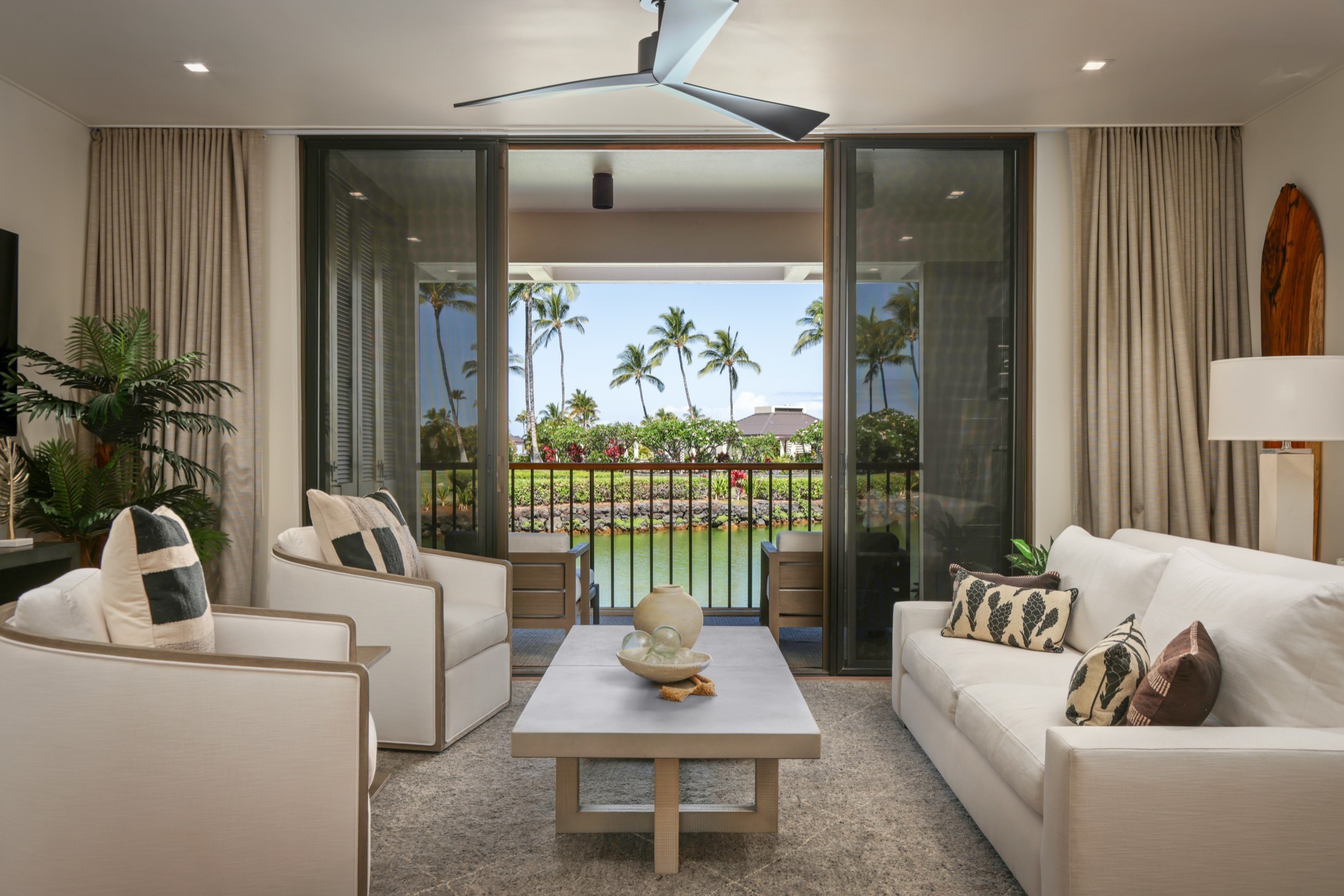
Auberge’s renovation of the Mauna Lani hotel changed the mood of the whole resort, with a new beach club, a real village of shops and restaurants, and the historic fishponds still at the center of it. Mauna Lani has the widest range of home types on this list, from villas and townhomes to oceanfront estates.
Building at Mauna Lani
A limited number of fairway estate lots remain, and tear-down-and-rebuild on the older oceanfront parcels is common. Like Mauna Kea, it sits in the low-hazard Kohala lava zones. Design review here is well organized and predictable, which is exactly what you want when your build calendar is already long.
6. Hōkūliʻa
Living at Hōkūliʻa
South of Kailua-Kona above Kealakekua Bay, Hōkūliʻa is a different proposition: large agricultural-zoned lots, often one to three acres, on a cooler, greener slope with sweeping views down the coast. Coffee grows here. It is the choice for owners who want land and privacy over a beach club at the door.
Building at Hōkūliʻa
Elevation and slope work in your favor for views and trade winds, but they make grading, driveways and drainage real design problems rather than afterthoughts. Hōkūliʻa is closer to the Mauna Loa side of the island, so confirm the lava zone parcel by parcel before you commit. Zone 3 and zone 2 sit closer together on this side of the coast than they do in Kona proper.
How a Big Island home gets built right
Every community on this list is a beautiful place to live. The difference between a good build and a bad year is what happens in the six areas below.
Hawaiʻi County building permits and timelines
A complete residential building permit application in Hawaiʻi County currently takes roughly three to six months to approve, and the word that matters is complete. The county’s electronic system flags missing items and sends the application back; a missing soils report or engineer’s stamp resets the clock. Lots in flood, coastal or special zones take longer. Add the community’s own design review in front of the county, and a realistic custom build on this coast runs eighteen to thirty-six months from signed contract to keys.
The Special Management Area and shoreline setbacks
Anything near the water on the Big Island touches the Special Management Area, which triggers a Planning Department review on top of the building permit, and shoreline setback rules that decide how close your lanai can sit to the sand. This is the single most common surprise for owners coming from the mainland, and the reason we start every oceanfront project with the survey, not the drawings.
What lava zones mean for living in Hawaii and home insurance
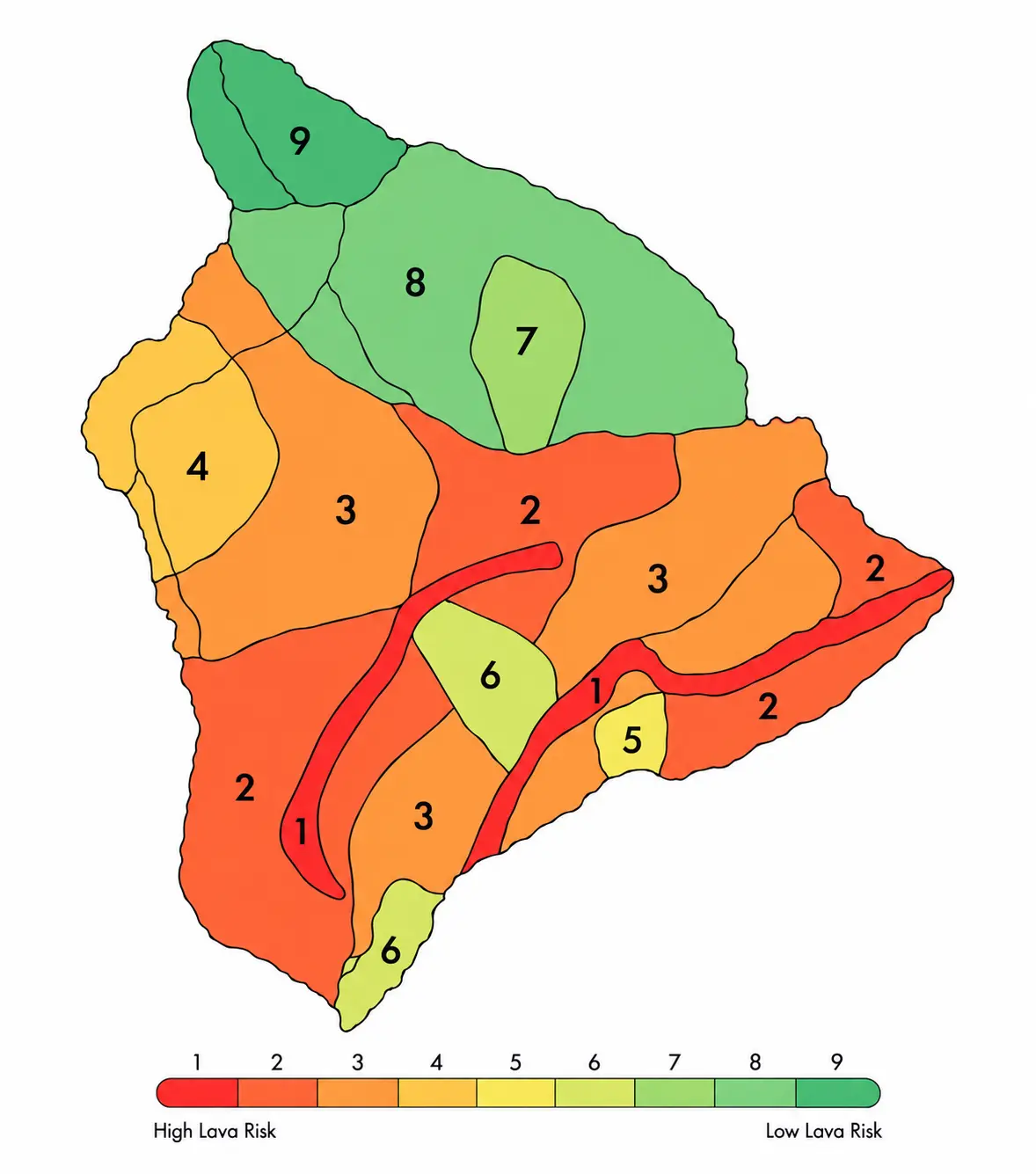
The U.S. Geological Survey maps the island into nine lava hazard zones. Most of the Kona Coast, including Kūkiʻo, Hualālai and Kohanaiki, sits in zone 4 on the side of Hualālai. The Kohala Coast, including Mauna Kea and Mauna Lani, is zone 8 or 9. Zones 3 and above are easy to insure with normal private carriers; zones 1 and 2 are limited to the state fund with capped coverage and far higher premiums. Know your zone before you know your architect.
Views, trade winds and orientation
The trade winds come from the northeast. A well-designed Kona home turns its living spaces to catch them, shelters the pool and main lanai behind the bulk of the house or inside a courtyard, and puts glass on the mauka and makai walls so the air moves through. Afternoon sun off the water is the enemy: overhangs of thirty-six to forty-eight inches keep it and wind-driven rain out without closing a single door. Done right, a house here rarely needs the air conditioning it was required to install.
Materials that last in salty air
Salt and sixty-plus percent humidity eat ordinary hardware in a few seasons. We specify marine-grade stainless fixings, basalt and honed stone at grade, cedar and ipe that are meant to grey, and finishes that can be maintained rather than replaced. It is the least glamorous line in the budget and the one that decides how the house looks in year ten.
One team from design to keys
Most of the delays we are called in to fix come from the gap between an architect, a builder and a manager who are all pointing at each other. Design, construction and management under one contract means the drawings are checked against the design review and the permit set before they are drawn, not after. That is the whole reason our company exists.
Frequently asked questions
How long does it take to build a custom home on the Big Island?
Plan for eighteen to thirty-six months from contract to certificate of occupancy, driven mostly by community design review and county permitting rather than the construction itself.
Which Big Island resort community has the best ocean views?
Hillside lots at Mauna Kea and Hōkūliʻa give the widest views; Kūkiʻo and Kohanaiki give the closest ones, at the water. Which is “best” depends on whether you want to look at the ocean or live on it.
Do I need an SMA permit to build near the shoreline in Kona?
If any part of the parcel falls in the Special Management Area, yes. Your project will need a Planning Department review and must respect the shoreline setback before a building permit is issued.
Which lava zone is Kūkiʻo in?
Kūkiʻo, like most of the Kona Coast on the flank of Hualālai, is in lava zone 4, which is straightforward to insure through standard carriers.
Can I build a home in a Big Island resort community and rent it short-term?
Usually not. Custom single-family estates at Kūkiʻo, Hualālai, Kohanaiki, Mauna Kea and Mauna Lani typically restrict short-term rental through their covenants and club rules. Confirm before you buy the lot.
Thinking about building on the Kona Coast?
Tell us the community and the lot you have your eye on. We will tell you what it will take to build there, honestly, before you spend a dollar on drawings.